



Your loved one may still manage most of the day on their own, but certain routines may start taking more effort. They may sit on the edge of the bed longer before standing, struggle with buttons while getting dressed, or ask for help stepping into the shower.
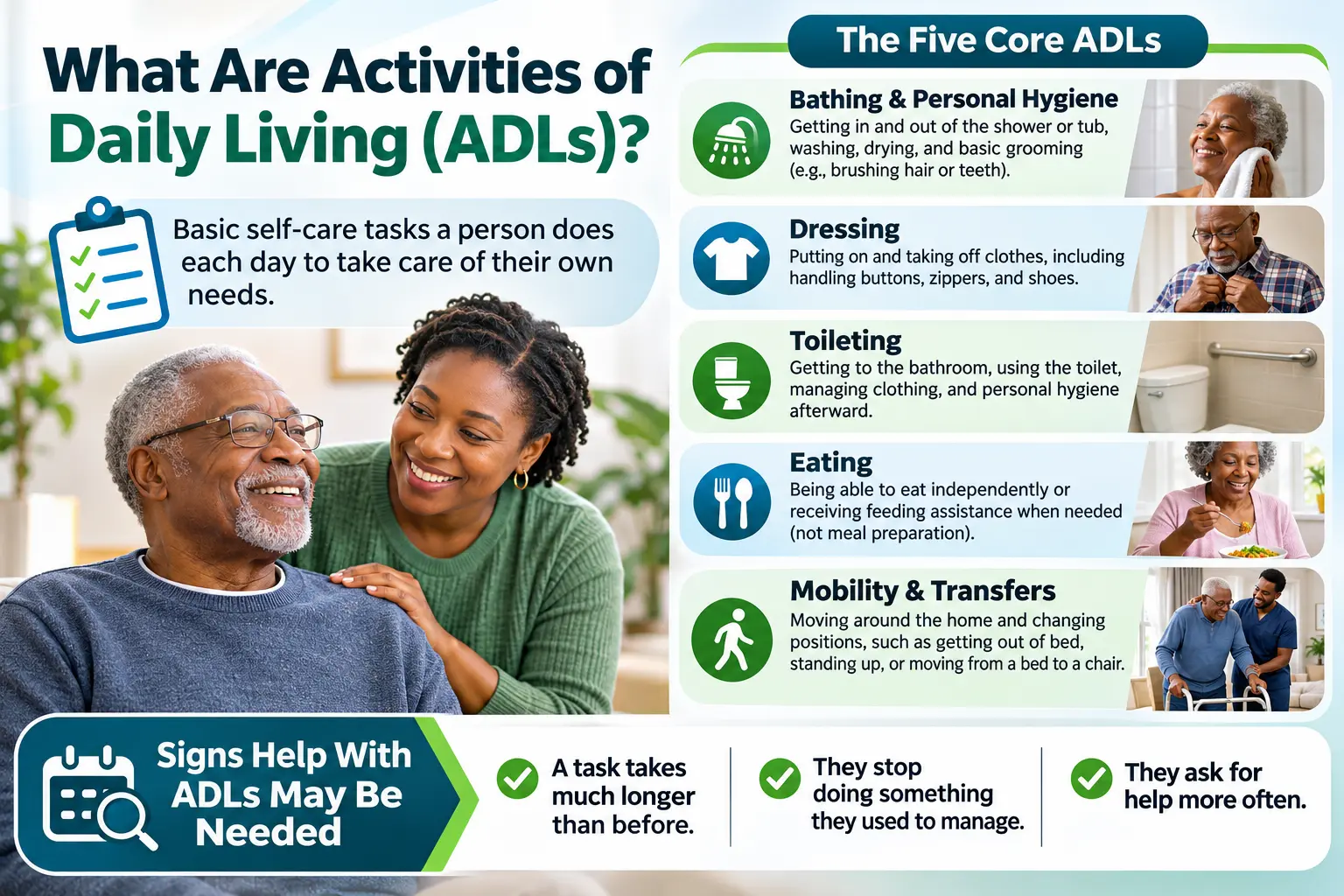
Those are the kinds of everyday self-care tasks referred to as Activities of Daily Living, or ADLs. They include bathing, dressing, toileting, eating, and moving from one position or place to another. Looking at these activities individually can help you see where your loved one is managing well and where some assistance may be useful.
Someone can need help with one activity while continuing to handle many others independently. A person who needs assistance getting dressed, for example, may still choose their own clothes, eat without help, and move around other parts of the home comfortably.
What Do Activities of Daily Living Include?
ADLs cover the basic tasks a person handles as part of caring for themselves each day.
Bathing and Personal Hygiene
Bathing can involve getting into and out of the shower or tub, washing, drying, and completing basic hygiene. Grooming may include brushing hair, caring for teeth, or handling other parts of a usual personal-care routine.
Your loved one may be able to manage most of these tasks but need help with one part, such as getting in and out of the shower safely.
Dressing
Dressing includes putting clothes on and taking them off, along with handling buttons, zippers, shoes, and other fasteners.
Watch for changes in how long the task takes or whether your loved one starts avoiding clothing that has become harder to manage. They may still want to choose what they wear while accepting help with the parts that cause difficulty.
Toileting
Toileting can include getting to the bathroom, using the toilet, managing clothing, and taking care of personal hygiene afterward.
Some people may also need help with incontinence. Because these needs are personal, assistance should take privacy, comfort, and dignity into account.
Eating
Eating as an ADL refers to being able to eat independently or receiving feeding assistance when needed.
It is different from meal preparation. Someone may have no difficulty eating but still need help preparing food, carrying a plate, or setting up the meal.
Mobility and Transfers
Mobility covers movement around the home, while transfers involve changing positions, such as moving from a bed to a chair or standing up from a seated position.
Difficulty does not always happen all day. Your loved one might move around comfortably in the afternoon but need more help getting out of bed in the morning.
How Can You Tell When Help With ADLs May Be Needed?
Pay attention to changes in how your loved one handles familiar routines. A task may start taking much longer, they may stop doing something they previously managed, or they may ask family members for help more often.
Specific situations give you more useful information than a general sense that things are getting harder. You may notice that your loved one leaves several buttons undone because fastening them is difficult. They might avoid bathing unless someone is nearby, or need assistance getting up from a favorite chair.
If these changes are becoming more noticeable, discussing care with a loved one can begin with the specific tasks that are becoming harder rather than focusing only on what they can no longer do.
You might mention what you have noticed and ask how the task feels from their perspective. They may be comfortable accepting help with one part of the routine while wanting to continue doing the rest on their own.
Why Do ADLs Matter When Planning Care?
ADLs give you a clearer way to explain what kind of help your loved one may need.
Instead of saying, “Mom needs more help now,” you can say that she manages meals and toileting independently but needs assistance getting dressed and stepping into the shower. That gives a care provider a much more useful picture of daily life.
It also helps you think about timing. Your loved one may need help mainly in the morning, at certain points during the day, or only with a few specific routines.
Writing these details down can be useful when preparing for a care assessment. You will have concrete examples to discuss, including what your loved one still does independently and where extra help may make sense.
ADLs are only part of the picture. Your loved one may also need help preparing meals, keeping up with light housekeeping related to health and safety, or having someone nearby for companionship and supervision. Family caregivers may need respite as well.
How Can In-Home Care Help With Daily Activities?
Once you have a clearer idea of which routines are becoming difficult, you can start looking at what kind of assistance fits those needs.
At Provision Home Care Inc, we understand that the right level of help looks different from one person to another. Through our personal care services, assistance may include bathing, dressing, mobility, and other approved daily support based on the client’s needs and care arrangement.
Support may also include toileting and incontinence assistance, meal preparation, light housekeeping, companionship, safety supervision, or respite for family caregivers, depending on the service arrangement.
Provision Home Care Inc works with each client’s identified needs, preferences, and care plan so assistance can focus on the parts of daily life where help is needed. Services are designed for seniors, adults with disabilities, and people recovering from illness or surgery, subject to applicable eligibility and service requirements.
Knowing Where Help Is Needed Makes Care Easier to Discuss
A change in one daily activity does not tell you everything about your loved one’s abilities. Look at what is happening during real routines, ask where they are having difficulty, and pay attention to what they still want to do for themselves.
That gives you a more accurate starting point for talking about care without treating every part of the day as a problem that needs to be solved.
If you are seeing changes in your loved one’s ability to manage everyday activities and want to understand what support may fit their situation, you can get in touch with us so our team can learn more about their needs and explain the next steps.